

Healthcare SEO Company: Content Clusters and Topic Authority
Aug 25, 2026


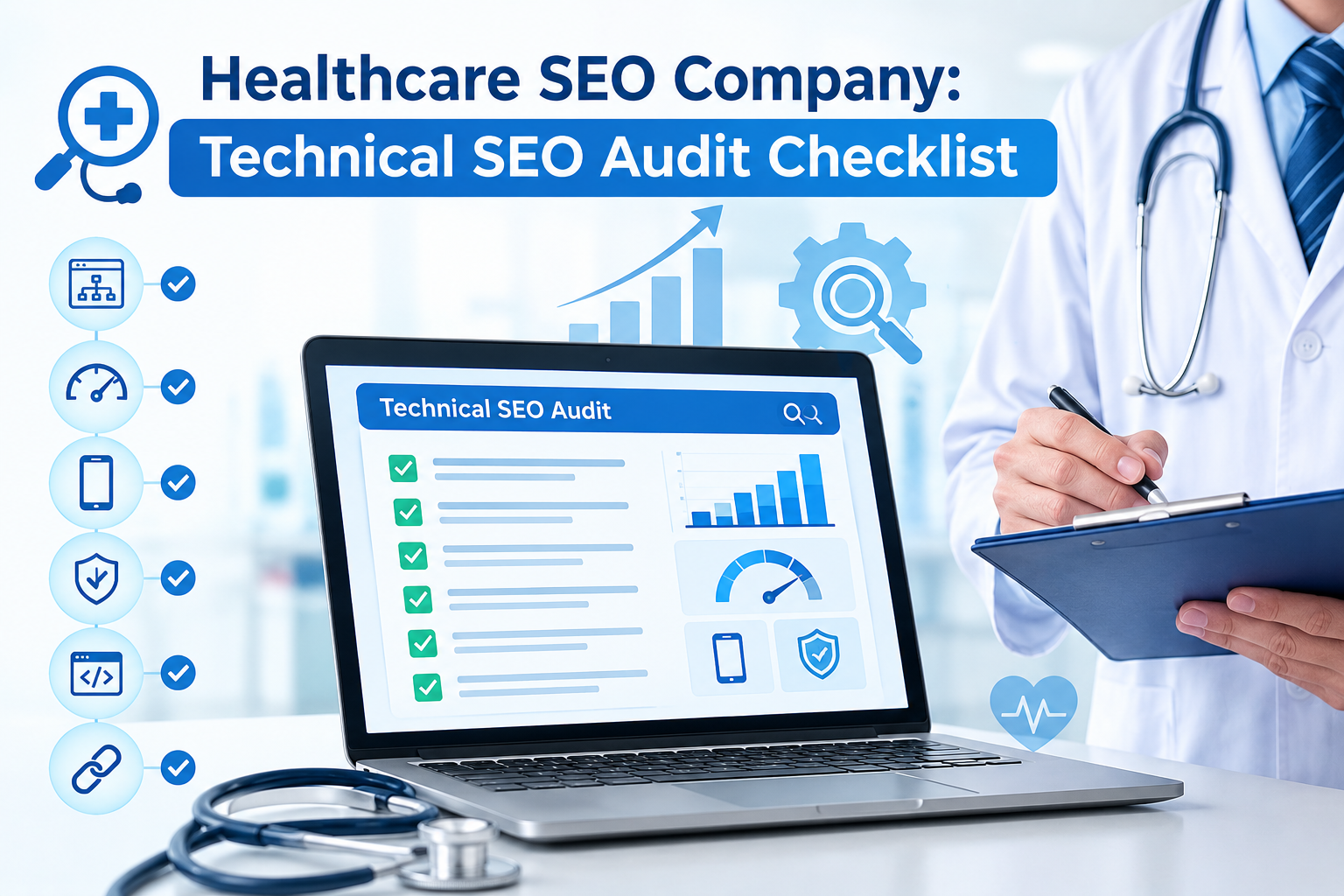
Your healthcare website needs more than valuable medical content to perform well in search results. If search engines cannot crawl, understand, index, or efficiently access your pages, even your best content may struggle to reach the right audience. A technical SEO audit helps you identify these barriers and create a stronger foundation for organic visibility.
When you work with a Healthcare SEO Company, you can approach technical SEO systematically rather than fixing problems only after rankings or traffic decline. A thorough audit examines your website structure, crawlability, indexing, Core Web Vitals, mobile usability, security, structured data, internal links, and local SEO signals.
You can use the following checklist to evaluate your healthcare website and prioritize improvements that support both search engines and patients.
Crawlability determines whether search engine bots can access the pages you want indexed. Start your audit by checking whether important healthcare service pages, provider pages, location pages, and educational resources are accessible to crawlers.
Review your robots.txt file to ensure it does not accidentally block valuable sections of your website. You should also look for unnecessary crawl paths created by filters, duplicate URLs, parameters, or outdated pages.
Check for:
Your goal is simple: make important pages easy for search engines to discover and access.
Your XML sitemap provides search engines with information about the URLs you consider important. It should contain only useful, canonical, indexable pages.
Review your sitemap regularly and remove URLs that return errors, redirect elsewhere, are blocked from crawling, or contain duplicate content.
For a healthcare website, make sure relevant service, treatment, provider, specialty, location, and resource pages are represented appropriately.
You should also confirm that your sitemap is correctly submitted through search engine webmaster tools and that there are no major discrepancies between your sitemap and indexed pages.
Crawling and indexing are different. A search engine may crawl a page without choosing to index it. Therefore, you need to investigate indexing status carefully.
Use your search performance and indexing tools to identify pages that are excluded, duplicated, discovered but not indexed, or blocked.
Pay particular attention to canonical tags. A canonical URL tells search engines which version of similar pages should be treated as the preferred version.
Check whether:
This is particularly important when your website contains similar treatment, condition, or location pages.
Patients often expect healthcare websites to load quickly, especially when they are searching for urgent information or trying to find contact details. Slow pages can create frustration and increase the likelihood that visitors leave before taking action.
Evaluate your Core Web Vitals and overall page performance. Look at loading performance, responsiveness, and visual stability across mobile and desktop devices.
You can improve performance by:
Do not focus only on a homepage score. Review important landing pages, service pages, appointment pages, and location pages individually.
Healthcare searches frequently happen on smartphones. Your website should therefore provide a smooth mobile experience from the first interaction through conversion.
Check whether text is readable without zooming, buttons are easy to tap, navigation works correctly, and forms fit smaller screens.
Test:
You should also make sure important information is not hidden or difficult to access on mobile devices.
Trust matters greatly when visitors are researching healthcare providers and sharing personal information. Your website should use HTTPS across every page.
Check for:
You should also monitor your website for vulnerabilities, outdated software, suspicious code, and unauthorized changes.
Technical security is not only an SEO consideration. It contributes to a safer and more trustworthy user experience.
A logical website architecture helps users and search engines understand how your information is organized.
Your healthcare website should have clear relationships between major categories, such as specialties, treatments, conditions, providers, resources, and locations.
Avoid forcing visitors to click through too many levels before reaching important information. Use descriptive navigation labels and organize related pages into logical groups.
For example, a specialty page can connect naturally to related treatment pages, provider information, FAQs, and relevant location pages.
A strong architecture also makes internal linking easier and helps distribute authority throughout your website.
Internal links connect your website’s pages and help search engines discover important content. They also guide visitors toward useful next steps.
Review your internal links for broken destinations, irrelevant connections, and excessive linking.
Use descriptive anchor text that clearly explains what users will find after clicking. Instead of vague phrases such as “click here,” use meaningful descriptions such as healthcare SEO services, local healthcare SEO strategies, or technical SEO solutions for healthcare websites where appropriate.
Make sure your most important commercial and informational pages receive relevant internal links from other authoritative pages on your site.
Structured data helps search engines interpret specific information about your organization and content. Healthcare websites may benefit from appropriate structured data for organizations, healthcare-related entities, providers, locations, breadcrumbs, articles, and other eligible content types.
Before implementing markup, make sure the information accurately reflects visible content on the page.
Audit your structured data for:
Do not add structured data simply to manipulate search results. Accuracy should always come first.
Healthcare content falls within a category where accuracy and trust are particularly important. Your technical audit should therefore include elements that support transparency and credibility.
Review whether your website clearly identifies qualified authors, healthcare professionals, organizations, and reviewers where appropriate.
You can strengthen trust signals by providing:
Your technical SEO strategy should support these trust signals by making important information easy to discover and navigate.
If you serve patients in specific cities, regions, or neighborhoods, local SEO should be part of your technical audit.
Check whether your location pages have unique, useful information instead of repeating identical content with different city names. Confirm that your business name, address, phone number, and operating information remain consistent across your website and relevant business profiles.
Review local elements such as:
Strong local SEO helps you connect with people searching for healthcare services in their area.
Duplicate and low-value pages can make it harder for search engines to understand which URLs deserve visibility.
Use your audit to identify pages with substantially similar content, outdated information, automatically generated location variations, or very little useful information.
Instead of publishing dozens of near-identical pages, focus on creating genuinely useful resources that address the needs of specific patients and communities.
Where duplication is necessary, use appropriate canonicalization, redirects, or other technical solutions.
Broken pages can disrupt both user journeys and search engine discovery. Crawl your website to identify 404 errors, redirect chains, redirect loops, and outdated internal links.
When a page has been permanently replaced, use an appropriate redirect to the most relevant destination. Avoid redirecting every deleted URL to your homepage because the replacement should provide comparable value.
Update internal links after major website changes so users are not repeatedly sent through unnecessary redirects.
A technical SEO audit should not be a one-time project. Healthcare websites change frequently as services, providers, locations, resources, and technologies are added or removed.
Create a recurring review schedule based on your website’s size and update frequency.
A practical process includes:
Monthly: Check indexing changes, broken links, major technical errors, security issues, and performance trends.
Quarterly: Review crawlability, sitemap health, redirects, internal linking, structured data, mobile usability, and Core Web Vitals.
After major website changes: Conduct a technical audit immediately after redesigns, migrations, URL changes, CMS updates, or domain changes.
This approach helps you identify problems before they significantly affect organic visibility.
Technical SEO can become complicated when your website contains hundreds or thousands of pages, multiple locations, provider profiles, treatment resources, and appointment pathways.
A professional Healthcare SEO Company can help you identify high-priority technical issues, analyze crawl and indexing patterns, improve site architecture, optimize performance, and establish an ongoing monitoring process.
The most effective approach is not to fix every issue at once. Instead, prioritize problems based on their potential impact on crawlability, indexing, user experience, conversions, and search visibility.
A technically strong healthcare website gives search engines a clearer understanding of your content while creating a smoother experience for visitors. By regularly checking crawlability, indexing, site speed, mobile usability, security, structured data, internal links, website architecture, and local SEO signals, you can build a stronger foundation for sustainable organic growth.
Start with a complete technical audit, document every issue, prioritize critical problems, and monitor your improvements over time. If you need professional guidance, use expert healthcare SEO support to evaluate your website and develop a technical SEO roadmap.
If your website has technical SEO problems that are affecting visibility or user experience, Contact Us to discuss your SEO requirements and identify practical opportunities for improvement.
A technical SEO audit evaluates the behind-the-scenes elements that affect crawling, indexing, performance, security, mobile usability, website architecture, structured data, and search visibility.
You should monitor technical issues continuously and conduct a comprehensive audit at least quarterly. Perform an additional audit after a website migration, redesign, major URL change, or significant technical update.
Mobile SEO helps ensure patients can quickly access healthcare information, provider details, contact information, and appointment options on smartphones and tablets.
Website speed can influence user experience and search performance. Improving loading speed and Core Web Vitals can help create a faster, more accessible experience for visitors.
Yes. A technical audit can review location pages, business information, internal links, structured data, mobile usability, and other technical elements that support local healthcare search visibility.