

Healthcare SEO Company: Internal Linking for Healthcare Websites
Sep 5, 2026


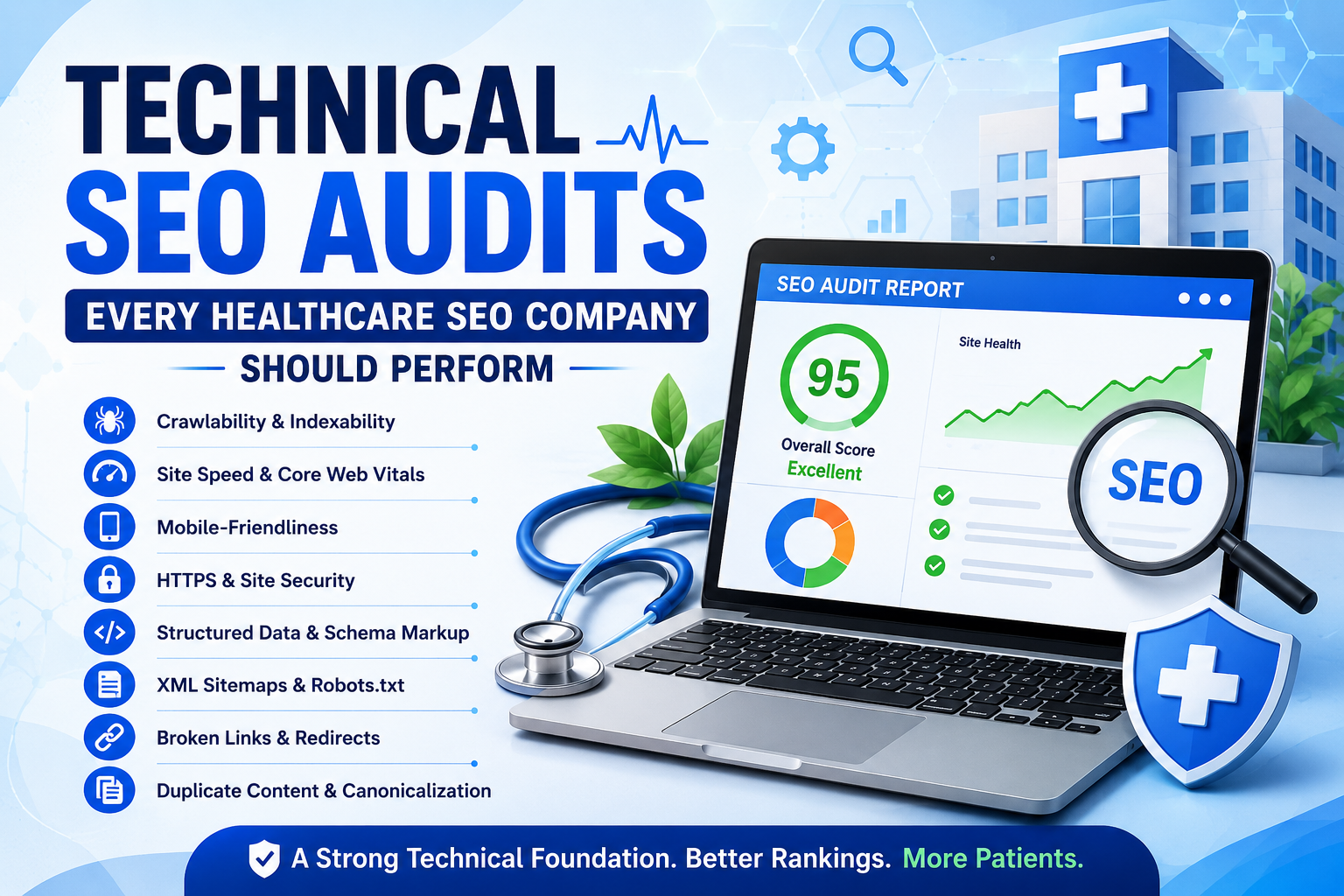
Your website may look visually impressive, but if search engines struggle to crawl, index, or understand it, your online visibility will suffer. Technical SEO is the foundation that supports every successful digital marketing strategy. Without a technically sound website, even the best content and backlinks cannot deliver their full potential.
A comprehensive technical SEO audit helps you identify hidden issues affecting your rankings, user experience, website speed, and conversions. Whether you manage a business website, an eCommerce store, or a service-based platform, regular technical SEO audits ensure your website remains healthy, accessible, and optimized for both users and search engines.
This guide explains why technical SEO audits matter, what they include, and how they improve your website’s overall performance.
A technical SEO audit is a detailed evaluation of your website’s infrastructure to identify issues that prevent search engines from efficiently crawling, indexing, and ranking your pages.
Unlike on-page SEO, which focuses on content and keywords, technical SEO examines the behind-the-scenes elements that influence website performance.
A professional audit typically reviews:
The goal is to create a technically optimized website that supports long-term organic growth.
Search engine algorithms continue evolving, making technical optimization more important than ever. A website that performed well last year may now contain hidden technical problems that reduce visibility.
Regular technical SEO audits help you:
Instead of reacting to ranking losses, regular audits help you prevent issues before they impact traffic.
Search engines rely on bots to crawl your website efficiently.
If crawlers encounter obstacles such as broken links, blocked pages, or poor navigation, valuable pages may never appear in search results.
A technical audit identifies:
Improving crawlability allows search engines to discover and understand your content more efficiently.
Not every crawled page becomes indexed.
Many websites unknowingly prevent important pages from appearing in search results due to:
A technical SEO audit ensures your most valuable pages are properly indexed while removing low-value pages from search engines.
Website speed directly impacts both user experience and search rankings.
Slow-loading websites often experience:
Technical audits identify speed-related issues including:
After resolving these issues, your pages load faster across desktop and mobile devices.
Google measures page experience using Core Web Vitals.
These include:
Measures loading performance.
Measures responsiveness.
Measures visual stability.
A technical SEO audit identifies elements causing poor Core Web Vitals and provides actionable recommendations for improvement.
Most users now browse websites using mobile devices.
Google primarily uses mobile-first indexing, making mobile optimization essential.
Technical audits evaluate:
Improving mobile usability creates better experiences while supporting stronger rankings.
HTTPS has become a basic ranking factor and an important trust signal.
A technical audit checks:
Visitors are more likely to trust and engage with secure websites.
A clear website structure helps both visitors and search engines navigate your content.
Technical audits analyze:
A logical website architecture distributes authority more effectively across your pages.
Broken links create poor user experiences while wasting crawl budget.
Technical audits identify:
Fixing these issues improves navigation and preserves SEO value.
Duplicate content confuses search engines and dilutes ranking signals.
Technical SEO audits identify duplication caused by:
Proper canonical implementation consolidates ranking authority.
Your XML sitemap guides search engines toward important pages.
An optimized sitemap should:
Technical audits ensure your sitemap accurately represents your website.
A single mistake in robots.txt can accidentally block important content.
Technical audits verify:
Proper configuration ensures search engines access essential pages.
Structured data helps search engines better understand your content.
Technical audits validate schema markup for:
Accurate structured data supports enhanced search visibility and AI-generated search responses.
Internal links distribute authority across your website while helping visitors discover related content.
A technical audit evaluates:
Improved internal linking strengthens topical authority.
Technical SEO is not a one-time task.
Your website changes frequently through:
Routine technical audits help maintain long-term website health.
Many businesses perform audits:
Regular monitoring prevents minor issues from becoming major ranking problems.
Modern search extends beyond traditional rankings.
Technical SEO now supports:
Search engines increasingly use artificial intelligence to understand website quality and content relationships.
Well-structured websites with clean technical foundations help answer engines deliver accurate responses.
AI-powered search platforms prioritize websites that offer:
A technical audit ensures your website is prepared for both traditional and AI-driven search environments.
Technical SEO also contributes to stronger local visibility.
Your audit should evaluate:
These improvements help local customers find your business more easily.
While many website owners can perform basic technical checks, comprehensive audits require specialized tools and expertise.
Partnering with an experienced Healthcare SEO Company ensures your website receives a detailed evaluation, accurate issue prioritization, and strategic recommendations tailored to your business goals. Professional specialists can identify hidden technical problems that automated tools often overlook, helping you improve rankings, user experience, and long-term organic growth.
Technical SEO is an ongoing investment rather than a one-time project.
Search engine algorithms, website technologies, and user expectations continue to evolve. Regular audits allow you to stay ahead of technical issues, maintain optimal website performance, and maximize your visibility in search results.
If your website has experienced declining traffic, slow loading speeds, indexing problems, or reduced conversions, now is the right time to evaluate its technical health. A comprehensive audit provides the roadmap needed to build a faster, more accessible, and search-friendly website that supports sustainable growth.
For expert guidance, customized recommendations, or a complete website evaluation, Contact Us today and discover how professional technical SEO audits can unlock your website’s full potential.
Most websites benefit from quarterly audits, while larger or frequently updated websites should perform technical SEO audits every month.
A technical SEO audit identifies issues affecting crawlability, indexing, speed, security, and overall website performance to improve search visibility.
Yes. Fixing technical issues helps search engines crawl and index your website efficiently, supporting stronger organic rankings.
Yes. Technical audits identify performance issues like large images, unnecessary scripts, poor caching, and slow server responses.
Technical SEO provides clean website architecture, structured data, fast loading, and mobile optimization that support AI-powered search and stronger local visibility.