

Healthcare SEO Company: Content Clusters and Topic Authority
Aug 25, 2026


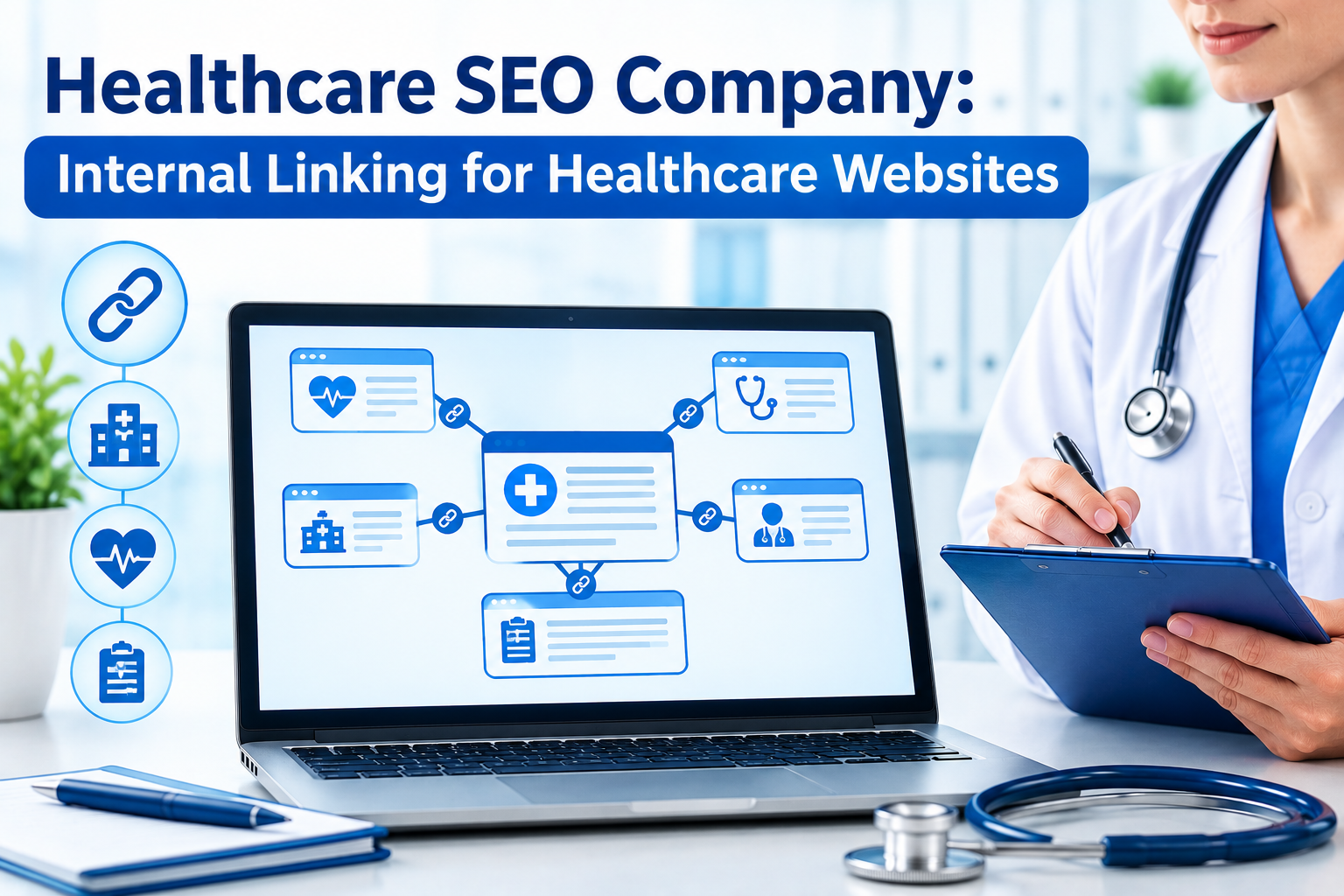
Internal linking is one of the most practical ways to improve your healthcare website’s search visibility, usability, and overall structure. When you connect related pages strategically, you help visitors discover useful information while giving search engines clearer signals about how your website is organized.
For healthcare websites, internal linking deserves extra attention because patients often need several pieces of information before taking action. Someone searching for a specific medical service may also want to understand symptoms, treatment options, costs, providers, locations, or frequently asked questions. A thoughtful internal linking strategy can guide that visitor through each relevant stage without making the experience confusing.
If you work with a Healthcare SEO Company using a structured internal linking strategy, you can build stronger topical relationships across your website while supporting both users and search engines.
Internal linking means connecting one page on your website to another page on the same website using a clickable link. These links can connect service pages, condition pages, blog posts, location pages, provider profiles, FAQs, and other relevant resources.
For example, a page about diabetes management could naturally link to related content about:
The goal is not to add as many links as possible. Instead, you should create meaningful connections that help visitors find the next piece of information they need.
A strong internal linking structure also establishes relationships between important pages. This can make your website easier for search engines to crawl and understand.
Healthcare websites frequently contain large amounts of information. You may have separate pages for dozens of conditions, treatments, specialties, doctors, locations, and educational resources.
Without an organized internal linking structure, important pages can become isolated or difficult to discover.
Your visitors should not have to return to the main navigation every time they want additional information. Contextual internal links allow them to move naturally from one topic to another.
For example, a visitor reading about back pain could see a relevant link to physical therapy services. Someone reading about preventive screenings could find a link to your primary care services.
This creates a smoother browsing experience.
Search engines use links to discover and navigate website content. A well-connected website gives crawlers clearer pathways to important pages.
You should make sure your priority pages receive relevant internal links from other authoritative pages. This can help search engines understand which content deserves greater importance within your website structure.
Internal links can reinforce relationships between related subjects.
Suppose your healthcare website publishes comprehensive resources about cardiology. You could connect content about heart disease symptoms, diagnostic tests, treatment options, preventive care, and cardiology services.
Together, these pages create a broader topical network. This supports a more organized content ecosystem instead of leaving individual articles disconnected.
Relevant links give visitors a reason to continue exploring your website. If a page answers one question and immediately provides access to the next relevant topic, visitors can find more value without performing another search.
The key is relevance. A link should help the visitor, not interrupt the reading experience.
Before adding links, identify the most important pages on your healthcare website.
Your structure might look like this:
Homepage → Specialty Pages → Service Pages → Condition Pages → Educational Content
For example:
Homepage → Cardiology → Heart Disease Treatment → Heart Failure → Heart Failure Symptoms
This hierarchy helps demonstrate relationships between broad topics and more specific subjects.
You can also create location-based structures:
Homepage → Locations → City Page → Specialty → Service
For a healthcare organization serving multiple locations, this approach can help connect local service information with relevant treatment and specialty content.
Avoid creating excessively deep structures. Important pages should ideally be reachable through a reasonable number of internal clicks.
Anchor text is the clickable wording used for an internal link. It should clearly communicate what the visitor will find after clicking.
Instead of using vague phrases such as:
Use descriptive phrases such as:
Descriptive anchor text improves usability because visitors can understand the destination before clicking.
You should also avoid forcing exact-match keywords into every link. Natural language is more useful than repetitive keyword placement.
For example, if your target keyword is “Healthcare SEO Company,” you can naturally introduce it in a sentence such as:
Working with a Healthcare SEO Company can help you develop an internal linking structure that supports your broader search strategy.
This keeps the keyword relevant without making the sentence feel unnatural.
One of the strongest internal linking opportunities for healthcare websites comes from connecting informational content with commercial or service-focused pages.
Imagine you have a blog post explaining the symptoms of sleep apnea. Within that article, you could naturally connect readers to a sleep medicine service page.
Likewise, an article about knee pain could link to:
This approach helps visitors transition from learning to taking action.
It also creates a logical relationship between informational and transactional content.
Topic clusters can make internal linking much more strategic.
Start with a broad pillar page covering a major healthcare subject. Then create supporting pages that address narrower questions.
For example:
Pillar Page: Diabetes Care
Supporting Pages:
Link the supporting pages to the main pillar page where relevant. Then connect related supporting pages when the relationship is useful.
This creates a connected content network rather than a collection of isolated articles.
Internal linking is especially useful when you operate in multiple cities or service areas.
Suppose your healthcare organization serves several communities. You can create location pages that connect to relevant services and specialties.
For example:
Healthcare Services in Delhi → Cardiology Services → Heart Health Resources
You can also connect location-specific pages with locally relevant service content.
However, avoid creating hundreds of nearly identical location pages simply to target city names. Each local page should provide genuinely useful information about services, providers, accessibility, and the community served.
A well-planned local internal linking structure can make it easier for users and search engines to understand the geographic relevance of your healthcare services.
Not every page on your website has equal value. Some pages naturally attract more backlinks, traffic, or engagement.
You should review these stronger pages and identify opportunities to link to important pages that need greater visibility.
For example, a popular healthcare guide might link to a relevant service page. An authoritative specialty page could link to a newly published educational resource.
This approach helps distribute internal link value throughout the site.
A few mistakes can weaken your internal linking strategy.
More links do not automatically create a better website. Excessive links can distract readers and make content difficult to scan.
Add a link when it provides meaningful value.
Do not link a phrase simply because it contains a keyword. The destination should genuinely relate to the surrounding content.
An orphan page has no meaningful internal links pointing to it. Important healthcare resources should not exist in isolation.
Regularly audit your website for pages that receive little or no internal linking.
Using identical anchor text across dozens of pages can make your content appear repetitive. Use natural variations while keeping the destination clear.
Your homepage is important, but your internal linking strategy should extend throughout the website. Connect relevant pages at multiple levels of your content structure.
Think beyond SEO metrics and consider what your visitor needs next.
A patient researching migraines may move through several stages:
Your internal links can support this journey.
For example, an informational article can link to a treatment page, which can link to a specialist profile, which can then direct visitors toward an appointment or contact page.
This makes your website more useful while creating a natural path toward conversion.
Internal linking should not be treated as a one-time SEO task. Websites change constantly. Pages are added, URLs are updated, services change, and older content becomes outdated.
Schedule regular audits to identify:
You should also review your analytics and search performance to determine whether your internal linking changes are helping visitors discover more relevant content.
Healthcare content requires a strong focus on trust and credibility. Internal linking can support this by connecting readers to valuable information about providers, credentials, services, treatment resources, and authoritative educational content.
For example, a treatment article could link to a provider profile that explains the professional’s qualifications and area of expertise.
This creates a more transparent content experience and supports the broader principles of Experience, Expertise, Authoritativeness, and Trustworthiness.
Your internal links should therefore contribute to both search visibility and user confidence.
Search behavior is becoming increasingly conversational. People ask complete questions through search engines, voice assistants, and AI-powered platforms.
Your content should answer specific questions clearly and connect related information logically.
For example, instead of publishing one broad page about dermatology, you can develop connected content addressing questions such as:
Use internal links to connect these answers with relevant specialty, service, and location pages.
This structure can make your content easier to navigate and understand across traditional and AI-driven search environments.
You can improve your internal linking process by following a simple workflow:
Step 1: Map your website.
List your main services, specialties, conditions, locations, providers, and educational resources.
Step 2: Identify priority pages.
Determine which pages generate leads, target valuable searches, or represent important services.
Step 3: Group related content.
Organize pages into logical topic clusters.
Step 4: Add contextual links.
Connect related pages naturally within your content.
Step 5: Improve anchor text.
Use concise, descriptive wording that tells visitors what to expect.
Step 6: Review local relationships.
Connect location pages with relevant specialties and services.
Step 7: Audit regularly.
Check for broken, missing, excessive, or irrelevant internal links.
Step 8: Measure results.
Monitor organic traffic, engagement, conversions, indexed pages, and user navigation patterns.
A strong internal linking strategy does more than move visitors between pages. It creates a connected information system that helps your audience discover useful healthcare resources while helping search engines understand your website.
You should prioritize relevance, clarity, accessibility, and user intent rather than adding links simply to increase their number. When every internal link has a clear purpose, your healthcare website can become easier to navigate, stronger in topical organization, and better prepared for traditional and AI-powered search.
If you want to evaluate your website’s current structure or identify opportunities for better healthcare search visibility, Contact Us for a tailored SEO discussion.
There is no fixed number. Add internal links wherever they provide genuine value. Focus on relevance, readability, and user intent instead of targeting a specific link count.
Yes. Effective internal linking can help search engines discover pages, understand website relationships, distribute internal authority, and help visitors navigate related healthcare information.
Use concise, descriptive anchor text that accurately explains the linked page. Avoid generic phrases such as “click here” and avoid repeatedly forcing the exact same keyword.
Yes. Relevant blog content can naturally link to appropriate service pages. This helps readers move from educational information toward relevant healthcare services without creating an aggressive sales experience.
Review internal links regularly, particularly after website redesigns, URL changes, new content launches, or service updates. A periodic SEO audit can help identify broken, missing, and irrelevant links.