

Healthcare SEO Company: Internal Linking for Healthcare Websites
Sep 5, 2026


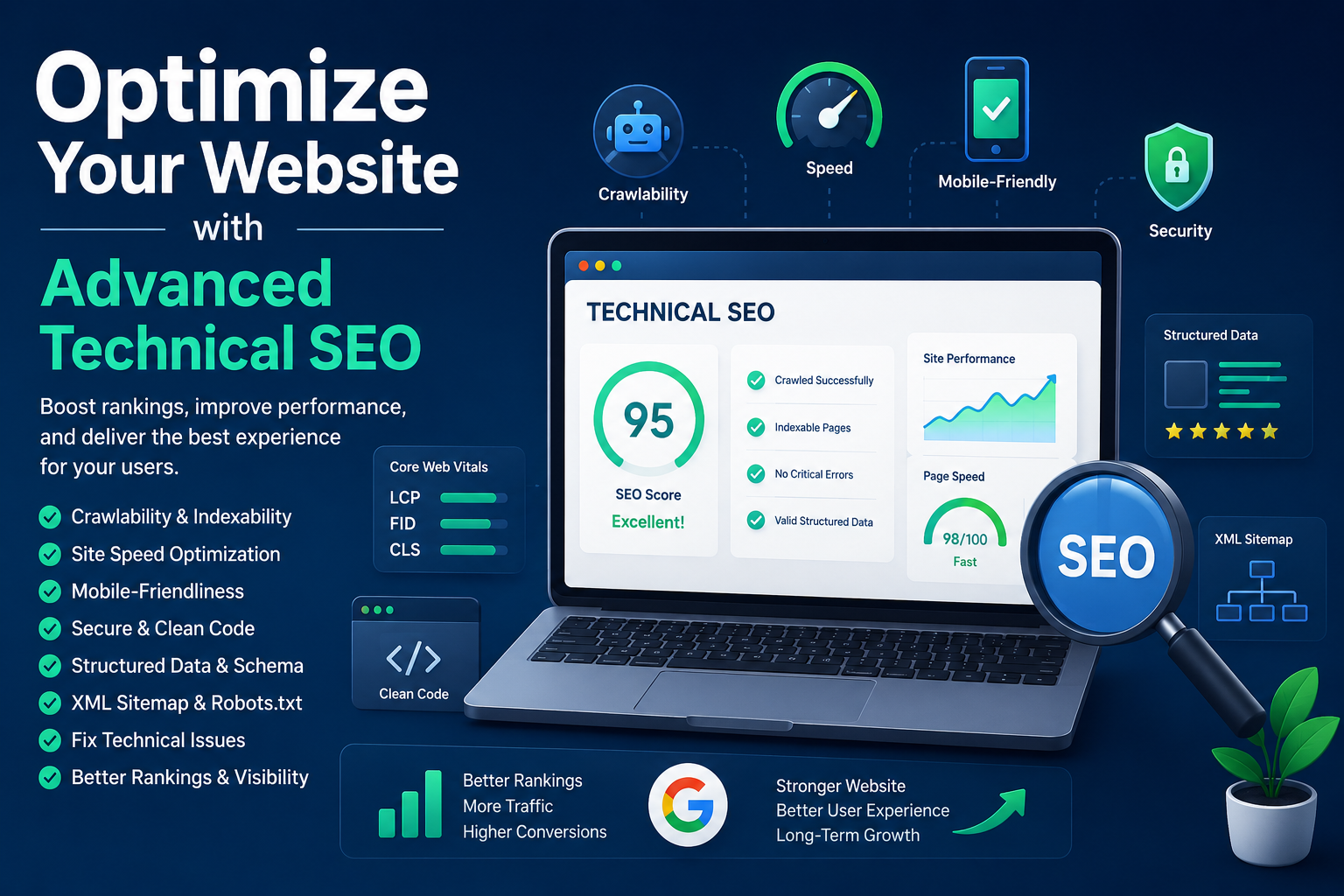
Your website is often the first interaction potential customers have with your business. While engaging content and attractive design are important, they are not enough to achieve higher search engine rankings. You also need a technically sound website that search engines can easily crawl, understand, and index. Advanced Technical SEO provides the strong foundation your website needs to improve visibility, enhance user experience, and increase organic traffic.
Whether you operate a local business, an eCommerce store, or a healthcare practice, investing in technical SEO helps you stay ahead of competitors while ensuring your website performs efficiently across all devices.
If you want sustainable online growth, optimizing your website with advanced technical SEO should be a top priority.
Advanced Technical SEO focuses on improving your website’s infrastructure so search engines can access, crawl, and index your pages without obstacles. Unlike content optimization or link building, technical SEO works behind the scenes to strengthen your site’s performance.
It involves optimizing:
These improvements help search engines understand your website while providing visitors with a faster and smoother browsing experience.
Search engines reward websites that offer excellent user experiences. Even if your content is outstanding, technical problems can prevent your pages from ranking well.
Advanced technical SEO helps you:
Without a solid technical foundation, your SEO strategy may never reach its full potential.
Website speed directly impacts both rankings and customer satisfaction.
Slow websites often experience:
Advanced technical SEO focuses on:
A faster website keeps users engaged while encouraging search engines to crawl more pages.
Core Web Vitals measure how users experience your website.
The three key metrics include:
Measures loading performance.
Measures user interaction responsiveness.
Measures visual stability during page loading.
Improving these metrics helps create a smoother experience while positively influencing search rankings.
Most online searches now happen on mobile devices.
Your website should provide:
Google primarily indexes mobile versions of websites, making mobile optimization essential.
Search engines use bots to crawl your website.
Common crawl issues include:
Regular technical audits identify and fix these issues before they affect rankings.
A well-organized website helps both users and search engines.
Effective architecture includes:
Simple navigation improves crawl efficiency while helping visitors quickly find information.
XML sitemaps tell search engines which pages should be indexed.
A properly optimized sitemap:
Submitting updated sitemaps ensures search engines discover new content quickly.
Robots.txt instructs search engine crawlers which pages they should or should not access.
Incorrect settings may accidentally block important pages from indexing.
Regular reviews help ensure your robots.txt file supports your SEO strategy instead of limiting visibility.
Duplicate content confuses search engines.
Canonical tags tell search engines which version of a page should be treated as the primary version.
Proper implementation:
Website security is now a ranking factor.
HTTPS offers:
Users are more likely to stay on secure websites.
Structured data helps search engines understand your content more accurately.
Schema markup may generate:
These enhanced search results often improve click-through rates.
Internal links distribute authority throughout your website.
They help:
Every important page should be connected through logical internal links.
Duplicate pages dilute SEO performance.
Advanced technical SEO identifies duplicate issues caused by:
Cleaning duplicate content improves ranking consistency.
Not every webpage should be indexed.
Regular monitoring helps identify:
Correcting indexing problems allows important pages to appear in search results.
SEO-friendly URLs improve usability and crawling.
Best practices include:
Simple URLs are easier for both users and search engines to understand.
Images contribute significantly to page speed.
Optimization includes:
Optimized images improve accessibility and search visibility.
Technical SEO is not a one-time task.
Regular audits help identify:
Frequent monitoring keeps your website healthy as search engine algorithms evolve.
Local businesses benefit significantly from advanced technical SEO.
Local optimization includes:
These improvements increase visibility for location-based searches.
Healthcare websites require exceptional technical performance because users often search for urgent, trustworthy information.
Working with an experienced Healthcare SEO Company ensures your medical website follows industry best practices while maintaining technical excellence, improving visibility, and delivering a secure, user-friendly experience for patients.
Healthcare websites benefit from:
Avoid these frequent issues:
Fixing these issues often delivers noticeable improvements in rankings.
Track your progress using metrics such as:
Consistent monitoring helps you identify opportunities for further optimization.
Advanced Technical SEO forms the backbone of every successful website. While great content attracts visitors, technical optimization ensures search engines can properly crawl, index, and rank your pages.
From improving website speed and mobile responsiveness to implementing structured data and resolving crawl issues, every technical improvement contributes to better visibility and stronger user experiences.
If your goal is long-term organic growth, investing in technical SEO is one of the smartest decisions you can make. Working with a trusted Healthcare SEO Company can help you implement advanced optimization strategies tailored to your industry and business goals.
Ready to improve your website’s technical performance? Visit our Contact Us page to connect with our SEO experts and discover how advanced technical SEO can help your website achieve higher rankings and lasting online success.
Advanced technical SEO improves your website’s infrastructure, making it easier for search engines to crawl, index, and rank your pages while enhancing user experience.
A complete technical SEO audit should be conducted every three to six months, with continuous monitoring for crawl errors, speed issues, and indexing problems.
Yes. Faster loading speeds, better crawlability, mobile optimization, and improved Core Web Vitals all contribute to stronger search engine rankings.
Healthcare websites require secure, fast, and trustworthy experiences. Technical SEO improves accessibility, search visibility, security, and patient engagement.
Yes. Faster websites, improved navigation, mobile optimization, and better user experience encourage visitors to stay longer and complete desired actions.