

Healthcare SEO Company: Internal Linking for Healthcare Websites
Sep 5, 2026


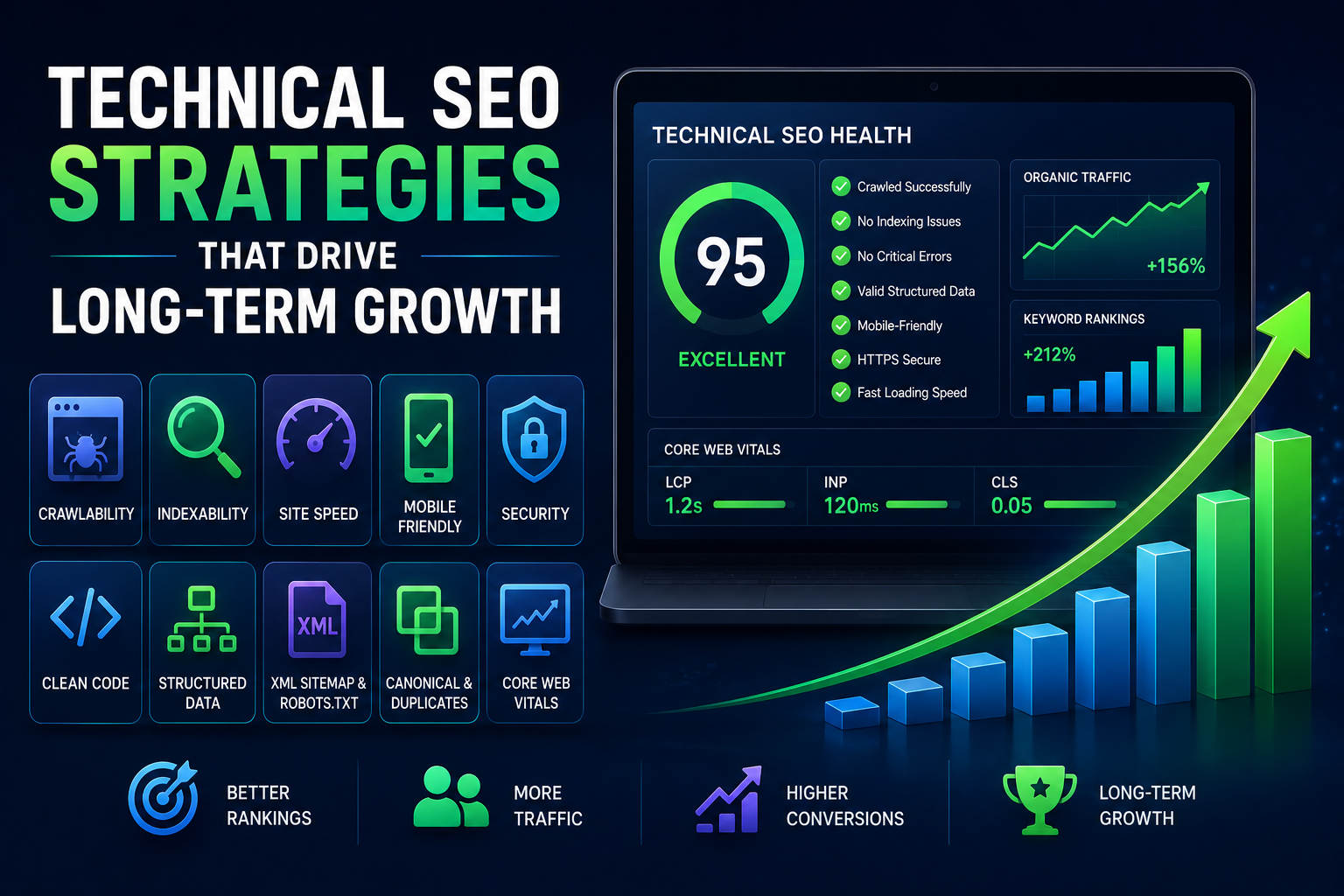
Your website can have excellent content, attractive design, and valuable services, but without a strong technical SEO foundation, your long-term growth will remain limited. Technical SEO ensures that search engines can efficiently crawl, index, and understand your website while providing visitors with a fast, secure, and user-friendly experience.
As search engines become smarter, technical optimization has evolved from being optional to becoming an essential part of every successful digital marketing strategy. If you want sustainable rankings, increased organic traffic, and better conversion rates, you need a proactive technical SEO plan rather than occasional fixes.
Whether you manage a local business, eCommerce store, healthcare practice, or corporate website, implementing proven technical SEO strategies today helps you build long-lasting search visibility tomorrow.
Technical SEO improves the infrastructure of your website so search engines can crawl and index pages efficiently. Instead of focusing only on keywords, it ensures every page performs at its best technically.
When your website loads quickly, works flawlessly on mobile devices, maintains secure connections, and provides structured information, search engines reward it with better visibility.
Benefits include:
These improvements continue delivering results long after implementation, making technical SEO one of the highest ROI digital marketing investments.
Your website structure influences how easily users and search engines navigate your content.
Create logical categories and organize pages into a clear hierarchy. Every important page should be accessible within a few clicks from the homepage.
Best practices include:
A well-organized website distributes authority throughout your pages while making crawling more efficient.
If you operate in the medical industry, working with an experienced Healthcare SEO Company ensures your website architecture follows healthcare-specific SEO best practices while remaining compliant with industry standards.
Website speed directly affects user satisfaction and search rankings.
Visitors expect websites to load almost instantly. Even small delays increase bounce rates and reduce conversions.
Focus on:
Google’s Core Web Vitals emphasize loading performance, responsiveness, and visual stability. Optimizing these metrics improves both SEO and user experience.
Regular speed monitoring helps identify new bottlenecks before they impact rankings.
Google primarily evaluates the mobile version of your website.
Your website should provide the same content, navigation, and functionality across all devices.
Mobile optimization includes:
A mobile-friendly website keeps visitors engaged while increasing search visibility across smartphones and tablets.
Search engines must discover and understand every important page.
Technical issues such as orphan pages, broken links, crawl errors, and incorrect robots.txt rules can prevent indexing.
Improve crawlability by:
Regular technical audits help maintain optimal crawl efficiency as your website grows.
Duplicate content creates confusion for search engines and dilutes ranking signals.
Common causes include:
Solutions include:
Unique content supported by proper canonicalization strengthens overall SEO authority.
Structured data helps search engines understand your content beyond traditional HTML.
Schema markup can generate rich search results including:
Rich snippets improve visibility and increase click-through rates by making listings more attractive.
For healthcare providers, structured data improves trust and enhances local search performance.
Core Web Vitals measure real-world user experience.
Three primary metrics include:
Measures loading speed.
Measures responsiveness.
Measures visual stability.
Improving these metrics enhances user satisfaction while supporting better search rankings.
Common improvements include:
Security has become a ranking factor.
Every website should use HTTPS encryption.
Additional security measures include:
Visitors trust secure websites, leading to improved engagement and conversions.
Broken links create poor user experiences and waste crawl budget.
Regularly monitor:
Implement permanent 301 redirects when pages move.
Maintaining healthy links preserves authority while improving navigation.
Internal links help search engines discover pages while distributing authority.
A strong internal linking strategy should:
Natural internal links increase page authority and keep visitors exploring your website longer.
Local businesses benefit significantly from technical optimization.
Focus on:
Healthcare organizations especially benefit from local visibility because patients often search for nearby providers.
Technical SEO supports stronger rankings in local map results and location-based searches.
SEO is never finished.
Search engines constantly evolve, websites change, and new technical issues emerge over time.
Perform routine audits to monitor:
Regular maintenance prevents small problems from becoming major ranking losses.
Professional technical monitoring keeps your website competitive year after year.
Technical SEO creates the foundation, but content delivers value.
Together they produce lasting growth.
Create:
When technical excellence supports outstanding content, your website becomes easier to crawl, easier to rank, and more valuable to users.
Search engines increasingly evaluate websites based on user experience, structured information, accessibility, and content quality.
Future-ready technical SEO includes:
Preparing today ensures your website remains competitive as search technology evolves.
Long-term SEO success depends on more than publishing content or building backlinks. A technically optimized website provides the stability required for sustainable rankings, better user experiences, and continuous organic growth.
By improving website architecture, speed, mobile usability, crawlability, structured data, Core Web Vitals, security, and internal linking, you create a strong foundation that supports every other SEO effort.
Whether you manage a local business or a healthcare organization, investing in technical SEO today positions your website for long-term success. If you’re ready to strengthen your website’s technical performance, visit our Contact Us page to discuss a customized SEO strategy that drives measurable growth.
Technical SEO improves your website’s infrastructure so search engines can crawl, index, and rank pages efficiently while delivering a better user experience.
A complete technical SEO audit should be performed every three to six months, with continuous monitoring for crawl errors, speed, and indexing issues.
Yes. Technical SEO removes barriers that prevent search engines from properly understanding your website, helping improve visibility and long-term rankings.
Core Web Vitals measure loading speed, responsiveness, and visual stability, all of which influence user experience and search performance.
Yes. Technical SEO improves mobile performance, local schema, website speed, and crawlability, helping local businesses achieve better visibility in location-based searches.