

Healthcare SEO Company: Internal Linking for Healthcare Websites
Sep 5, 2026


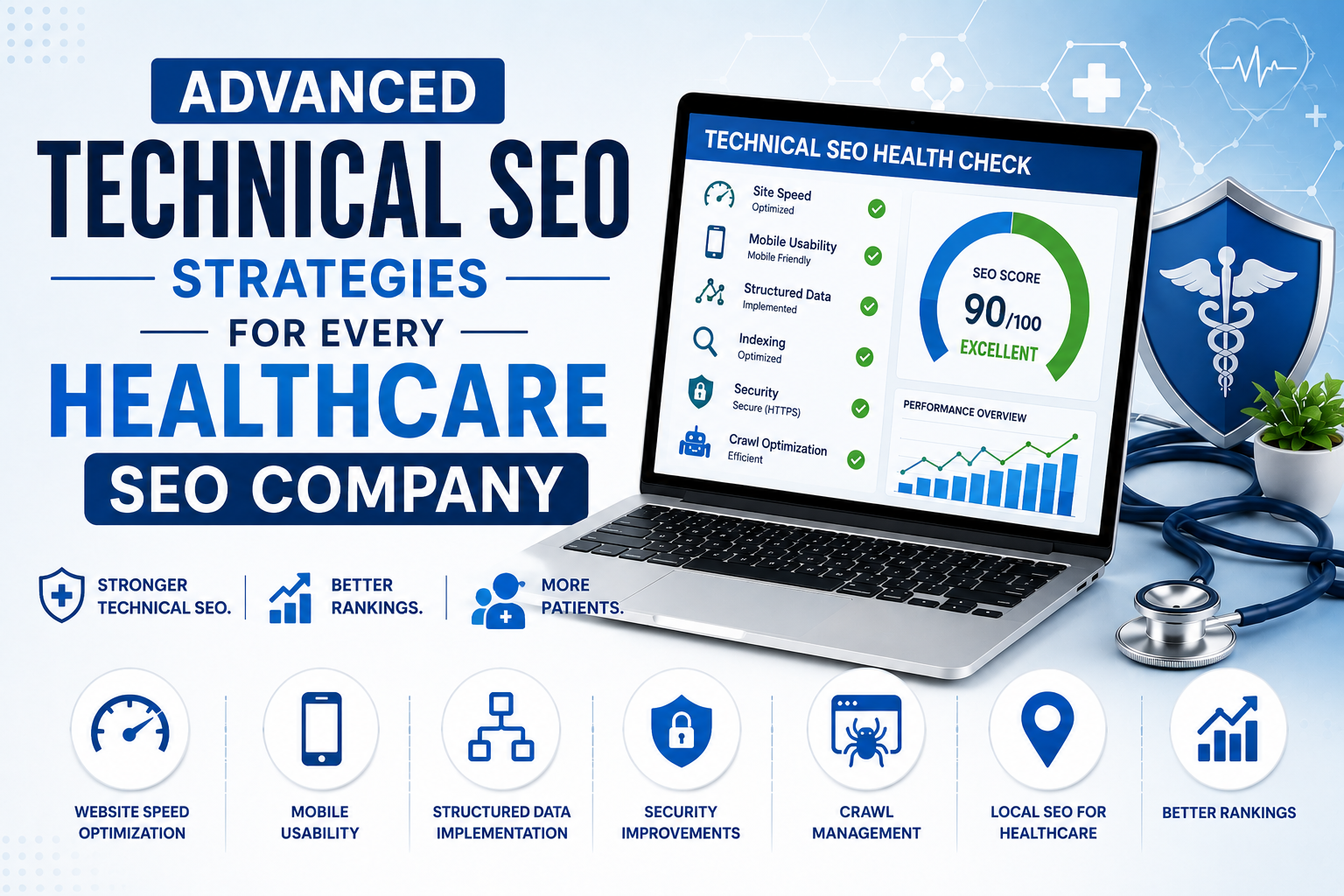
In today’s competitive digital healthcare market, having a professionally designed website is no longer enough. Every Healthcare SEO Company must focus on advanced technical SEO strategies to help healthcare businesses improve search visibility, attract qualified patients, and build long-term online authority.
Technical SEO creates the foundation for a high-performing healthcare website. Without proper optimization, even the best medical content may struggle to rank on search engines. From website speed to structured data, technical SEO helps search engines crawl, understand, and index healthcare websites more effectively.
If you want your healthcare clients to outperform competitors, implementing advanced technical SEO practices is essential. This guide explains the most effective technical SEO strategies every Healthcare SEO Company should use to improve website performance and online growth.
Healthcare websites handle sensitive information and require exceptional user trust. Patients expect fast-loading, secure, mobile-friendly websites that provide reliable information quickly.
Technical SEO helps healthcare websites:
A Healthcare SEO Company that focuses on technical optimization can help healthcare providers create a better experience for both users and search engines.
Website speed is one of the most important ranking factors. Patients searching for healthcare services often leave slow websites within seconds.
A Healthcare SEO Company should optimize:
Large medical images can slow down websites significantly. Compress images without reducing quality to improve loading times.
Enable browser caching to store website files locally for returning visitors.
Reducing unnecessary code improves page speed and website performance.
A CDN distributes website content across multiple servers to improve loading speed globally.
Faster websites not only improve rankings but also increase patient engagement and appointment conversions.
Google’s Core Web Vitals measure website usability and user experience. Every Healthcare SEO Company should monitor these metrics regularly.
Important Core Web Vitals include:
Measures how quickly the main content loads.
Tracks website responsiveness when users interact with the page.
Measures visual stability during page loading.
Healthcare websites with excellent Core Web Vitals often experience better rankings and lower bounce rates.
Most healthcare searches now happen on mobile devices. Google primarily uses the mobile version of websites for indexing and ranking.
A Healthcare SEO Company should ensure:
A mobile-friendly healthcare website improves patient satisfaction and search engine performance.
Structured data helps search engines better understand website content. Healthcare schema markup improves visibility in search results and enhances click-through rates.
Important schema types include:
Structured data can help healthcare websites appear in rich results, increasing visibility and credibility.
XML sitemaps help search engines discover and index website pages efficiently.
A Healthcare SEO Company should:
Well-optimized sitemaps improve crawling efficiency and indexing accuracy.
The robots.txt file tells search engines which pages to crawl or avoid.
Incorrect robots.txt settings can accidentally block important healthcare pages from search engines.
Healthcare SEO professionals should:
Proper configuration improves website crawl efficiency.
Security is essential for healthcare websites because users often share personal information online.
Google prioritizes secure websites in search rankings. Every Healthcare SEO Company should ensure websites use HTTPS encryption.
Benefits include:
Healthcare websites without HTTPS may lose both rankings and user confidence.
Healthcare organizations often manage large websites with hundreds of service pages, blogs, and resources.
Search engines allocate limited crawl resources to each website. Crawl budget optimization ensures important pages are indexed efficiently.
Strategies include:
Efficient crawl management improves indexing and search visibility.
Duplicate content is common on healthcare websites, especially when similar services exist across multiple locations.
Canonical tags tell search engines which page version should be treated as the primary page.
This helps:
Every Healthcare SEO Company should regularly audit canonical implementation.
Internal linking helps users and search engines navigate healthcare websites effectively.
Strong internal linking strategies:
For example, blog posts about symptoms can internally link to treatment pages or appointment forms.
A clear internal structure strengthens overall SEO performance.
Local SEO is critical for hospitals, clinics, and medical practices.
Technical local SEO optimization includes:
Maintain accurate contact information, business hours, and healthcare categories.
Ensure Name, Address, and Phone Number remain consistent across all directories.
Use structured data to strengthen local search relevance.
Create unique, optimized pages for each clinic or healthcare location.
These strategies help healthcare providers appear in local search results and Google Maps listings.
Broken links negatively affect user experience and SEO performance.
Healthcare SEO audits should identify:
Regular technical maintenance keeps healthcare websites healthy and search-friendly.
Healthcare websites rely heavily on visuals, including medical illustrations, doctor photos, and treatment images.
Image optimization should include:
Optimized images improve accessibility, page speed, and image search visibility.
Accessibility is an important ranking and usability factor. Healthcare websites must be accessible to all users, including those with disabilities.
Accessibility improvements include:
Accessible healthcare websites create better patient experiences and broader audience reach.
Technical SEO is not a one-time process. Regular audits help identify problems before they affect rankings.
A Healthcare SEO Company should routinely check:
Continuous optimisation ensures long-term website growth and stability.
Advanced technical SEO directly impacts business performance. A properly optimised healthcare website can:
Healthcare providers that invest in technical SEO often achieve better long-term digital marketing results.
Technical SEO is the backbone of every successful healthcare website. Without proper optimization, even valuable healthcare content may struggle to rank and attract patients.
Every Healthcare SEO Company should prioritize advanced technical SEO strategies such as website speed optimization, mobile usability, structured data implementation, security improvements, and crawl management.
By building a strong technical foundation, healthcare businesses can improve online visibility, enhance patient experience, and achieve sustainable digital growth.
If you want to improve your healthcare website rankings and generate more qualified leads, partnering with an experienced Healthcare SEO Company can help you achieve measurable results.
Ready to strengthen your healthcare website performance and grow your online presence? Contact Us today to discover customized healthcare SEO strategies designed to help your medical business achieve long-term success.
Technical SEO improves website performance, search rankings, security, and user experience, helping healthcare providers attract more patients online.
Healthcare schema markup is structured data that helps search engines better understand medical website content and improve search visibility.
Mobile optimisation improves usability on smartphones and tablets, which helps websites rank better in Google’s mobile-first index.
Core Web Vitals measure website speed, responsiveness, and visual stability, which directly impact user experience and SEO rankings.
Technical SEO audits should be performed regularly, ideally every few months, to identify and fix website issues before they impact rankings.